
During your master's studies, you have the opportunity to travel abroad. In France or Taiwan, you will gain experience, practise your language skills, and return with a second degree. You can complete the Double Degree programme at the National Taiwan University of Science and Technology (NTUST) or at the EURECOM institution.
Characteristics of the KIT study programme
The Communication and internet of things study programme focuses on developing students' independence in finding innovative solutions to new problems they encounter in practice, as well as their ability to navigate modern technologies. At the same time, students will learn advanced measurement techniques necessary for the design and diagnostics of such devices and systems.
Graduates will find wide employment opportunities both on the domestic and foreign labor markets as development or operational engineers in the field of electronic components and systems of modern IoT and communication systems. Their expertise provides a basis for obtaining positions at the level of research, development, application, product, or sales managers.

Double Degree programme

Top-level information technology
There is currently strong demand for information technology specialists, which — given current trends — is set to continue for some time to come. Programming skills are now an essential part of an engineer's skill set. The KIT programme will teach you to understand the functional principles and architectures of electronic systems.

Advancement in electrical engineering
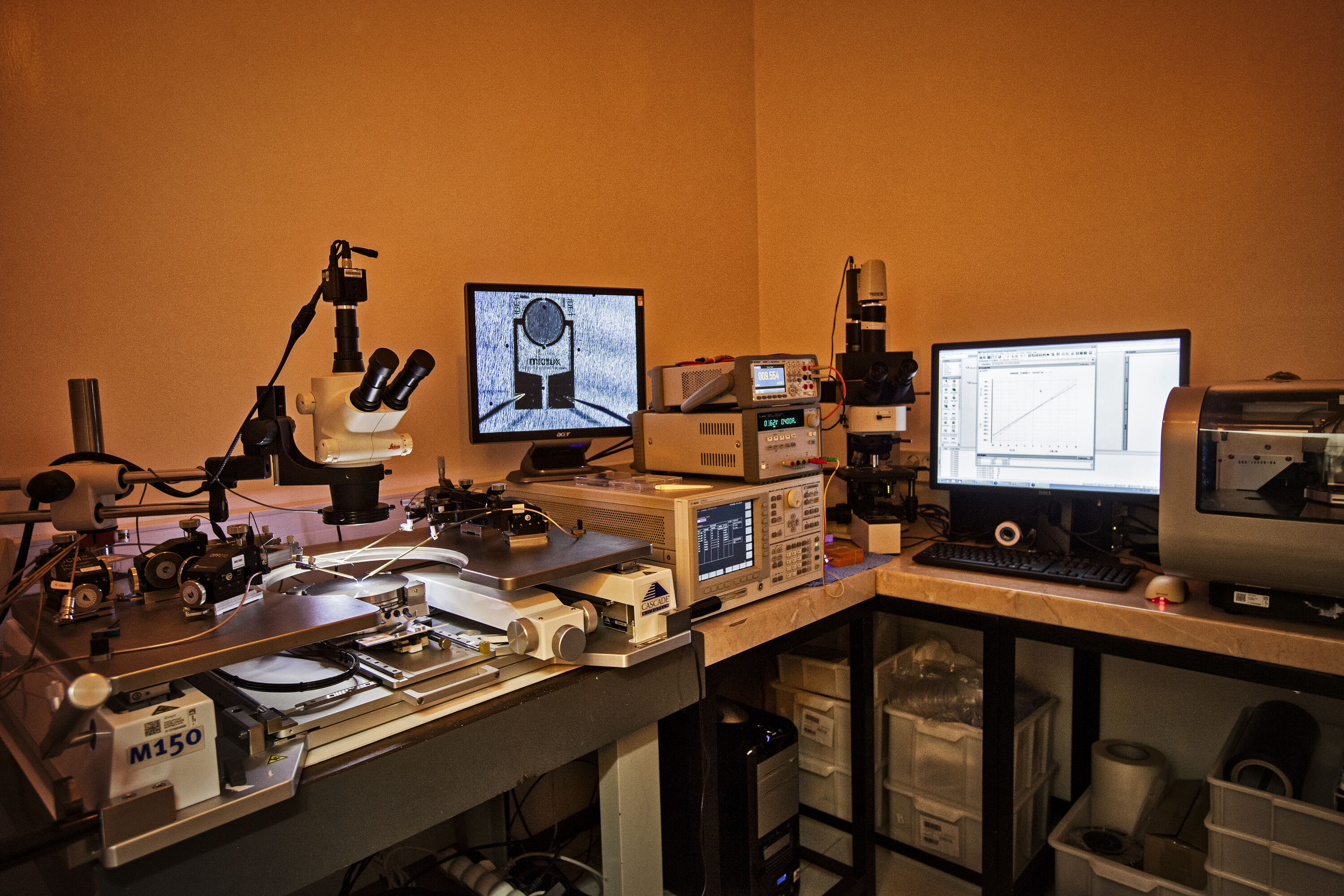
Technology is advancing by leaps and bounds, and what is modern today may be prehistoric tomorrow. In the KIT study programme, we keep pace with the times, teaching students to adapt quickly to change and respond appropriately. You will try your hand at testing circuits, designing printed circuit boards, and building prototypes.

Detailed knowledge of communication technologies
KIT offers its students excellent career prospects, extensive knowledge, and a wide range of study options. The study programme provides students with broad theoretical knowledge and practical insight into electronic systems, communication technologies and networks, audiovisual technology, and signal processing.
What will you learn?
- to identify the strengths and weaknesses of a specific device or system
- to describe, diagnose, analyze, model, and simulate problems in their field using appropriate software tools
- to decide on the suitability of a specific product for the required activity
- to design, implement, and organize repairs to IoT devices
- to design individual components of radio and optical systems and their composition into complex functional blocks,
-
to design technologies for new-generation wireless cellular systems, radio navigation, radio transmitters and receivers, microwave systems,
-
to master cyber security systems, the application of modern machine learning methods, and demanding technical challenges of the future, such as autonomous electric mobility,
-
to design suitable network solutions for various types of applications, assess the interoperability of individual network components, and integrate them into central monitoring and control systems.
What skills and knowledge will you gain?
-
the knowledge of communication systems and automatic control systems,
-
the knowledge of the design and operation of electrical engineering systems,
-
the knowledge in the field of signal processing, IoT (Internet of Things) programming, and intelligent sensor and measurement application design,
-
the ability to design and scale networks and apply appropriate diagnostic, analytical, and cryptographic methods,
-
the knowledge of electrical engineering safety rules,
-
the knowledge of technical and software equipment in the areas of mobile and fixed communications, telecommunications, wireless, computer and industrial control networks, the Internet and the Internet of Things, backbone and access networks,
-
the ability to solve practical tasks in the field of imaging technology, design and optimization of complex systems for signal scanning, compression, reproduction and recording, or knowledge of signal analysis and stochastic processing, adaptive signal processing methods, modern methods of classification and data mining.




Physics in everyday life
You will apply your knowledge of physics when designing special technologies—electronic systems, communication technologies and networks, audiovisual technology, and signal processing—that will help people for many years to come.

We solve real-world problems
The term "designing electronic systems" refers to real designs for real systems. You will have the opportunity to put your acquired skills to practical use and apply them to actual production components and modern technologies. If you prefer to create reality with your own hands, KIT is the right programme for you.
We work with big companies
The departments involved in teaching the KIT study programme collaborate with a number of leading technology companies, and many of the final thesis topics are based on their actual needs. The European Space Agency (ESA), the European Organization for Nuclear Research (CERN), Rohde & Schwarz, ST Microelectronics, Texas Instruments, Alcoma, Cesnet, Bosch, ČEZ, and O2 Czech Republic are just a few of the companies that collaborate with the departments involved in teaching the KIT program. And you can too.


Why study the KIT study programme at FEE CTU?
All study programs at our faculty combine electronics and computer science. Soldering irons, ones and zeros. We will teach you how to invent, build, and program things with your own hands. With an emphasis on individual approach, timeless education, and 100% employability immediately after graduation.